
LinkedIn Content Tips for Professionals That Work
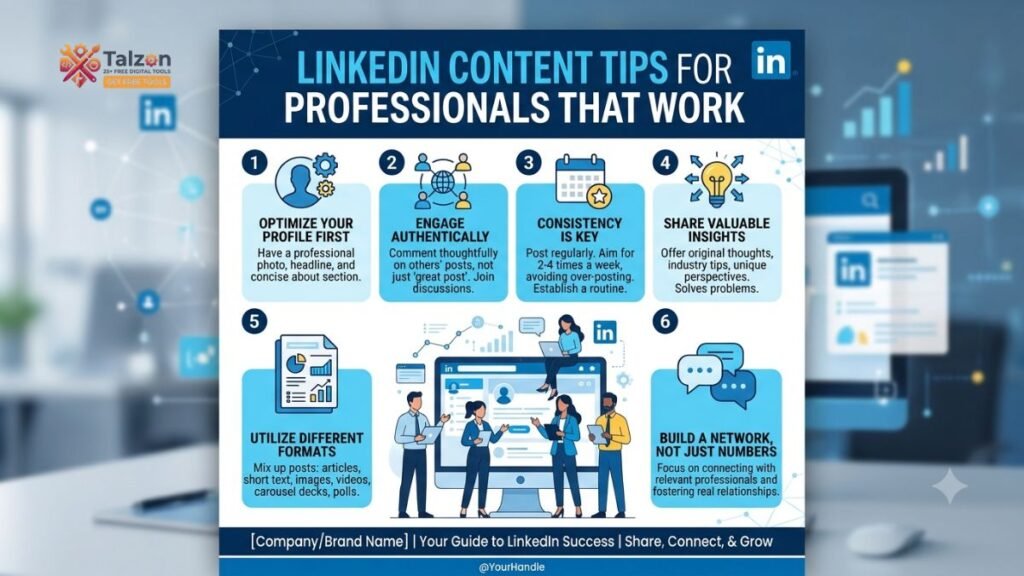
LinkedIn has become more than a digital resume platform. It is now one of the most important places for professionals to build authority, connect with the right audience, and open doors to new opportunities. If you want your posts to stand out, you need more than random updates or polished corporate language. You need a clear content strategy built around value, consistency, and human connection.
The best LinkedIn content tips are simple in principle but powerful in practice: write for people, not algorithms; share insights instead of filler; and keep your voice clear, credible, and useful. In this article, you will learn how to create LinkedIn content that feels authentic, performs well, and supports your professional goals.
Why LinkedIn Content Matters
LinkedIn content helps professionals shape how others see them. A well-written post can show expertise, highlight experience, and build trust far faster than a static profile alone. When people consistently see useful ideas from you, they start to remember your name and associate it with your field.
This matters because attention on LinkedIn often turns into opportunity. Recruiters, clients, collaborators, and industry peers all use the platform to evaluate credibility. Strong content gives them a reason to follow you, reach out, or take your work seriously.
Know Your Audience
Before you write anything, be clear on who you want to reach. A post for hiring managers should sound different from a post for potential clients, and both should differ from content aimed at peers in your industry. The more specific your audience, the easier it becomes to write content that feels relevant.
Ask yourself what your readers care about most. Are they looking for practical advice, industry insights, career growth, leadership lessons, or problem-solving ideas? Once you know that, you can create posts that answer real needs instead of speaking in vague generalities.
Build A Clear Voice
One of the most important LinkedIn content tips is to sound human. Too many professionals write like brochures, using formal language that feels stiff and detached. Instead, aim for a voice that is confident, clear, and approachable.
Your writing should reflect how you speak in a professional setting. That does not mean being casual to the point of losing credibility. It means choosing plain language, short sentences, and a tone that makes readers feel like they are hearing from a real person, not a template.
Start With A Strong Hook
The first line of your LinkedIn post matters a lot. If it does not catch attention, people will scroll past before reading the rest. A strong hook creates curiosity, highlights a problem, or promises useful insight.
You can start with a surprising stat, a bold statement, a question, or a short personal observation. For example, instead of saying, “Here are some tips for better LinkedIn posts,” you might say, “Most LinkedIn posts fail because they try to sound impressive instead of helpful.” That approach is more direct and more likely to make people keep reading.
Focus On One Idea
A common mistake professionals make is trying to say too much in one post. They pack in multiple lessons, several points, and too many details, which makes the message harder to follow. Strong LinkedIn content usually works best when it focuses on one clear idea.
Choose a single takeaway and build the post around it. This makes your content easier to read, easier to remember, and easier to share. If you have multiple ideas, turn them into a series of posts rather than forcing them all into one.
Use Storytelling Wisely
People connect with stories more than statements. A short story about a challenge you faced, a lesson you learned, or a result you achieved can make your content more engaging and relatable. Storytelling helps turn abstract advice into something people can picture and trust.
The key is to keep the story relevant. Do not share personal details just for the sake of it. Instead, use a short narrative to support your point and show how your experience led to a useful insight. This is one of the most effective LinkedIn content tips for professionals who want to sound both authentic and knowledgeable.
Write For Skimming
LinkedIn users scan content quickly, so formatting matters. Large blocks of text can discourage readers even if the idea is strong. Make your posts easier to read by using short paragraphs, clean spacing, and simple sentence structure.
You can also improve readability by using line breaks for emphasis and keeping paragraphs to just a few lines. If your post includes steps, insights, or tips, present them in a structured way. The easier your content is to scan, the more likely people are to finish reading it.
Add Real Value
Every post should give readers something useful. That could be a practical tip, a fresh perspective, a lesson learned, or a mistake to avoid. If your content does not help the reader in some way, it will struggle to make an impact.
Value does not always mean teaching something complex. Sometimes the most helpful content is simple and specific. A short post about how you improved meetings, solved a client issue, or handled a project challenge can be just as valuable as a long educational article if it is honest and actionable.
Use Keywords Naturally
If you want your content to be discoverable, include relevant keywords without stuffing them into every sentence. Your focus keyword, LinkedIn content tips, should appear in a natural way in your headline, opening, and a few supporting places across the article or post. This helps improve search visibility while keeping the writing readable.
You should also use related terms such as LinkedIn content strategy, personal branding, professional posts, and content writing for LinkedIn. Search engines and platform users both benefit when your content clearly signals what it is about. The goal is not repetition for its own sake, but clarity.
End With Engagement
A good LinkedIn post should invite interaction. One of the easiest ways to do that is to end with a question, a prompt, or a simple call to action. This gives readers a reason to comment, reflect, or share their own experience.
For example, you might ask, “What LinkedIn content strategy has worked best for you?” or “Which of these tips will you try in your next post?” Engagement matters because it helps your content reach more people and creates stronger professional relationships.
Stay Consistent
Posting once in a while is better than posting nothing, but consistency builds stronger results over time. When people see you showing up regularly with useful content, they begin to trust your expertise. That trust is often what turns visibility into meaningful professional growth.
Consistency does not mean posting every day if that is unrealistic. It means choosing a rhythm you can maintain, whether that is two times a week or once a week. A steady posting habit will usually outperform occasional bursts of activity.
Repurpose Smartly
You do not need to create every post from scratch. Many professionals already have useful material in presentations, emails, project notes, client conversations, or blog articles. Repurposing that content saves time and helps you stay active on LinkedIn without constantly starting from zero.
Take one core idea and adapt it into different formats. For instance, a blog post can become a short insight post, a carousel, or a personal reflection. This approach keeps your content plan efficient while still giving your audience variety.
Avoid Common Mistakes
Even strong professionals can weaken their LinkedIn content by making a few simple mistakes. Some posts are too self-promotional, some are too generic, and others sound like they were written by a committee. These issues make content feel disconnected and forgettable.
Avoid jargon when simpler language works better. Avoid writing only about yourself without giving readers a takeaway. And avoid posting content that sounds polished but says nothing meaningful. On LinkedIn, clarity and usefulness usually outperform cleverness.
Conclusion
Good LinkedIn content writing is not about sounding perfect. It is about being clear, useful, and genuine enough that people want to keep reading. The best LinkedIn content tips help you communicate your expertise in a way that feels human and builds trust over time.
If you want your content to perform well, focus on one audience, one idea, and one clear message at a time. Keep your writing readable, add real value, and stay consistent. Over time, these small habits can create a strong professional presence that supports your goals and expands your network.