
Resume Keywords ATS: Boost Your Ranking Fast
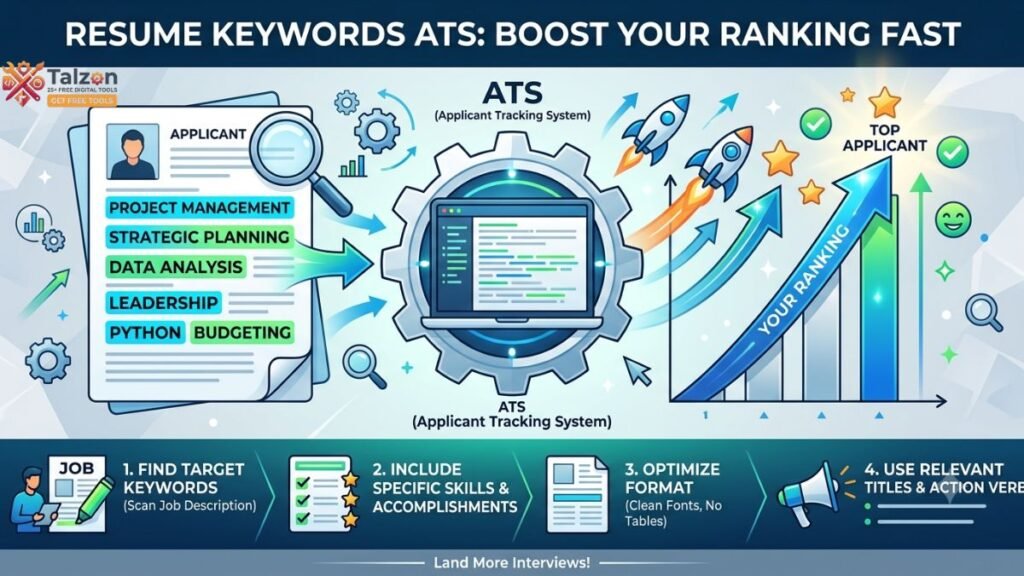
If you want your resume to reach a real human, it first has to impress the software that screens it. That is where resume keywords ATS systems look for become important, because they help determine whether your application moves forward or gets filtered out.
What an ATS Does
An Applicant Tracking System, or ATS, is software companies use to manage job applications. It collects resumes, sorts candidates, and scans documents for relevant information before a recruiter ever sees them.
In many hiring workflows, the ATS acts like a gatekeeper. It checks whether your resume matches the job posting, especially by looking for skills, job titles, certifications, and industry terms.
Why Keywords Matter
Resume keywords are the words and phrases that connect your experience to the job description. When an ATS scans your resume, it compares those terms against the employer’s requirements and ranks applicants based on relevance.
That means your resume may not be judged only by your experience. It may also be judged by how closely your language matches the language in the posting.
For example, if a job ad asks for “project management,” “budget forecasting,” and “stakeholder communication,” a resume that uses similar terms is more likely to score well than one that says only “managed tasks” or “worked with teams.”
How ATS Ranking Works
Most ATS platforms do not “read” a resume the way a person does. They parse text, identify patterns, and look for matches in key areas such as:
- Job titles.
- Skills.
- Certifications.
- Tools and software.
- Years of experience.
- Education.
The system then assigns a level of relevance or ranking based on how many of those terms appear and how closely the resume aligns with the job. A highly relevant resume is more likely to land in the recruiter’s review pile.
The Role of Resume Keywords ATS Systems Look For
The phrase resume keywords ATS refers to the important terms an ATS identifies when screening applications. These keywords usually fall into a few categories: hard skills, soft skills, industry language, certifications, and role-specific responsibilities.
Hard skills are often the easiest to identify because they are concrete. Examples include Python, Salesforce, financial modeling, SEO, and data analysis.
Soft skills can matter too, but they are more effective when supported by context. Instead of simply writing “team player,” show a result that proves collaboration, such as “partnered with marketing and sales teams to launch a new campaign.”
Where to Place Keywords
Keyword placement matters almost as much as keyword choice. You want to include important terms in places the ATS is likely to scan first.
The most effective sections are:
- Summary or professional profile.
- Skills section.
- Work experience bullets.
- Certifications and education.
- Project descriptions.
Do not hide keywords in a long paragraph where they are hard to identify. Keep your resume clear, structured, and easy for both software and people to understand.
How to Choose the Right Keywords
The best keywords come directly from the job description. Start by reading the posting carefully and identifying repeated terms, required tools, and major responsibilities.
Then compare those terms with your own background. If you have the experience, use the same or very similar wording on your resume. This helps the ATS recognize that your skills align with the role.
Look for terms like:
- Exact job title.
- Software and platforms.
- Technical abilities.
- Certifications.
- Industry phrases.
- Action verbs tied to the work.
If multiple similar job postings use the same term, it is probably an important keyword worth including.
Natural Keyword Use
A strong resume should sound human, not stuffed with repeated phrases. ATS systems may look for keywords, but recruiters still read the resume afterward, and awkward repetition can hurt your chances.
Use keywords naturally in full sentences and accomplishment statements. For instance, instead of saying “project management” five times, write one bullet that shows leadership in a project management context and another that shows results tied to delivery, budget, or timelines.
A natural example might look like this:
“Led cross-functional project management efforts for a product launch, coordinating timelines, vendors, and stakeholder updates to deliver the launch two weeks ahead of schedule.”
This reads clearly for a person and still gives the ATS the terms it needs.
Common Keyword Mistakes
Many job seekers lose points because they misunderstand how ATS systems work. One common mistake is keyword stuffing, which means repeating the same phrases too often in an attempt to game the system.
Another mistake is using creative language instead of standard job-search terms. If the posting asks for “customer service,” writing only “client happiness ambassador” may sound clever but could reduce match quality.
Other mistakes include:
- Using outdated job titles.
- Ignoring the exact wording in the posting.
- Listing skills you cannot explain in an interview.
- Putting keywords only in a cover letter, not the resume.
- Using graphics or text boxes that ATS software may not parse correctly.
The goal is not to trick the system. It is to make your real experience easier to detect.
How Keywords Affect Human Review
ATS rankings matter because they influence whether a recruiter sees your application at all. But even after your resume passes the software scan, the content still needs to make sense to a person.
Recruiters look for clarity, results, and evidence of impact. Keywords may get you through the door, but they should be backed by strong achievements, measurable outcomes, and a clean layout.
For example, saying you know “data analysis” is less powerful than showing you used data analysis to improve conversion rates, reduce costs, or shorten reporting time.
Balancing SEO and Readability
Think of resume writing as a balance between optimization and storytelling. Yes, you want your resume keywords ATS systems recognize, but you also want the document to feel polished and easy to read.
A good resume should do both:
- Match the job description closely.
- Highlight your most relevant achievements.
- Use simple formatting.
- Keep language specific and professional.
- Avoid overused buzzwords without proof.
If your resume sounds robotic, it may pass the ATS but fail the recruiter. The best resumes are optimized and human at the same time.
A Simple Keyword Strategy
A practical approach can make the process much easier. Here is a simple way to improve your resume for ATS screening without overcomplicating it.
- Copy the job description into a document.
- Highlight repeated skills, tools, and requirements.
- Compare those terms with your own resume.
- Add missing keywords where they truthfully fit your background.
- Rewrite bullet points to show those skills in action.
- Check the final version for clarity and flow.
This method helps you target the right terms while keeping your content authentic.
Example of Keyword Optimization
Here is a simple example. Suppose a job description asks for “digital marketing,” “SEO strategy,” “content creation,” and “Google Analytics.”
A weak resume bullet might say:
“Helped improve online presence and supported campaigns.”
A stronger, keyword-aligned bullet might say:
“Developed digital marketing campaigns, supported SEO strategy, created blog content, and used Google Analytics to measure traffic growth.”
The second version is better because it gives the ATS specific match terms and gives the recruiter more context about your work.
Formatting Tips That Help ATS
Keywords matter, but formatting does too. An ATS can only rank what it can read, so your resume should be clean and simple.
Use these formatting best practices:
- Choose a standard font.
- Use clear section headings.
- Avoid tables, text boxes, and images.
- Keep file names professional.
- Save in a common format if requested, usually PDF or Word.
- Use bullet points for achievements.
A simple, readable layout improves the chance that your keywords are properly scanned and interpreted.
Final Thoughts
Resume optimization is not about stuffing your document with repeated phrases. It is about using the right language so both ATS software and hiring managers can quickly see your value.
When you understand how resume keywords ATS systems evaluate applications, you can write a stronger resume, target each role more precisely, and improve your chances of getting an interview. The best approach is always the same: use relevant keywords honestly, place them strategically, and support them with real accomplishments.