
Resume ATS Mistakes 10 Errors ATS Rejects Fast
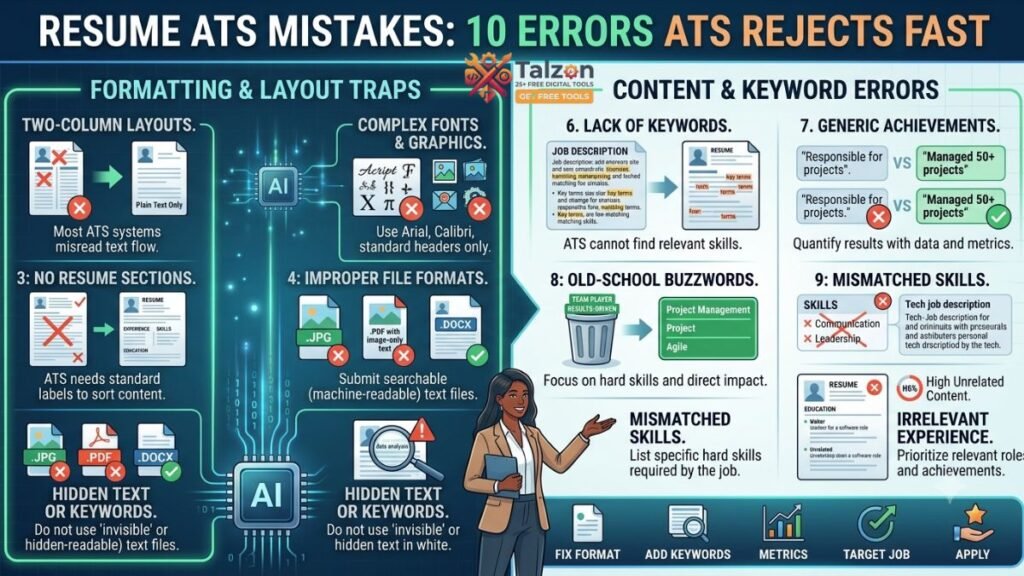
Job seekers often assume ATS software is some mysterious robot judge looking for perfection. In reality, it is usually a parsing and ranking system that scans for structure, keywords, job titles, dates, and relevant skills. When your resume is cluttered, vague, or formatted in a way the system cannot read, you can be rejected even if you are qualified.
That is why understanding the most common resume ATS mistakes matters. Once you know what ATS software tends to miss, you can make small changes that dramatically improve your odds of getting through the first screen.
What ATS looks for
ATS systems are built to help recruiters sort applications faster. They typically look for readable text, standard headings, role-specific keywords, clear work history, and consistent dates. If those elements are missing or hidden in graphics, tables, or unusual formatting, the system may misread or ignore important parts of your resume.
Top resume mistakes
1. Using fancy formatting
One of the biggest resume ATS mistakes is trying to impress with design-heavy layouts. Columns, sidebars, icons, graphics, and text boxes may look polished to people, but they often confuse ATS parsers and cause information to land in the wrong place or disappear completely.
A simple single-column layout is usually safer. Keep the design clean, left-aligned, and easy to scan so both software and recruiters can follow your career story without friction.
2. Missing job keywords
ATS software compares your resume against the wording in the job description. If you use different terms than the employer uses, the system may not recognize that your experience matches the role, even when it does.
For example, if a posting asks for “project management” and your resume only says “led initiatives,” you may lose keyword relevance. The fix is not stuffing random terms everywhere; it is weaving the exact phrases naturally into your summary, skills, and experience sections.
3. Reusing the same resume
Sending one generic resume to every job is another common mistake. ATS systems reward relevance, so a resume tailored to the role usually performs better than a one-size-fits-all version.
You do not need to rewrite everything from scratch. Instead, adjust your headline, summary, core skills, and top bullets so they reflect the language and priorities of the specific job.
4. Choosing the wrong file type
File format matters more than most people think. Some ATS tools handle PDFs well, but others process DOCX files more reliably, and scanned or image-based PDFs can be especially risky because the text may not be machine readable.
When in doubt, follow the employer’s instructions exactly. If no format is specified, use a clean, text-based file that preserves readability and avoids scanning issues.
5. Hiding contact details
Putting your phone number, email, or address in a header or footer can backfire because some ATS systems skip those areas during parsing. That means your resume might reach the system, but the most basic information needed to contact you may never be captured.
Keep your contact details in the main body at the top of the page. It sounds boring, but boring is often better when you want software to understand your document.
6. Using creative section titles
ATS systems recognize standard headings more easily than clever ones. Labels like “My Journey,” “Where I’ve Been,” or “What I Bring” may sound fresh, but they can reduce the chance that the software correctly classifies your content.
Use familiar headings such as Work Experience, Education, Skills, Certifications, and Summary. Clear section names help the ATS map your content properly and make your resume easier for recruiters to skim later.
7. Leaving out measurable results
A resume full of duties but no outcomes feels incomplete to both ATS and humans. Numbers help show impact, and they also give the system more relevant data points to match against performance-based job descriptions.
Instead of writing “responsible for sales growth,” try “increased monthly sales by 18% in six months.” Specific results create credibility, make your resume more memorable, and usually improve overall quality.
8. Weak or inconsistent dates
Dates matter because ATS software often uses them to understand your work history timeline. If your employment dates are missing, inconsistent, or formatted oddly, the system may struggle to read your progression and experience level.
Use one clear format throughout the resume, such as Jan 2021 – Mar 2023. Consistency makes your timeline easier to parse and reduces the chance of avoidable errors.
9. Spelling and grammar errors
Typos may seem minor, but they can affect how ATS systems interpret keywords and how recruiters view your professionalism. A misspelled job title or skill can break a keyword match entirely.
Always proofread carefully and read your resume aloud if needed. A second set of eyes helps too, because even strong candidates overlook small mistakes in familiar text.
10. Overloading with irrelevant details
Stuffing your resume with unrelated hobbies, outdated experience, or unnecessary personal information can dilute the most important keywords. ATS systems need clarity, not clutter, and recruiters prefer a resume that quickly signals fit.
Keep the focus on achievements, skills, certifications, and experience that support the target role. Every line should earn its place by helping you move closer to an interview.
How to fix it
The best way to beat resume ATS mistakes is to treat your resume like a highly readable, role-specific document rather than a graphic design project. Use a simple layout, standard headings, exact job-related keywords, and measurable accomplishments.
Here is a practical formula:
- Start with a clean single-column format.
- Match the wording in the job description naturally.
- Use standard headings and readable fonts.
- Add numbers to show results.
- Save the file in the format the employer wants.
Final take
ATS rejection is often not about whether you are qualified. It is usually about whether your resume is readable, searchable, and relevant enough for the system to pass it along. If you remove the most common resume ATS mistakes, you give your application a much better chance of reaching a real person.